
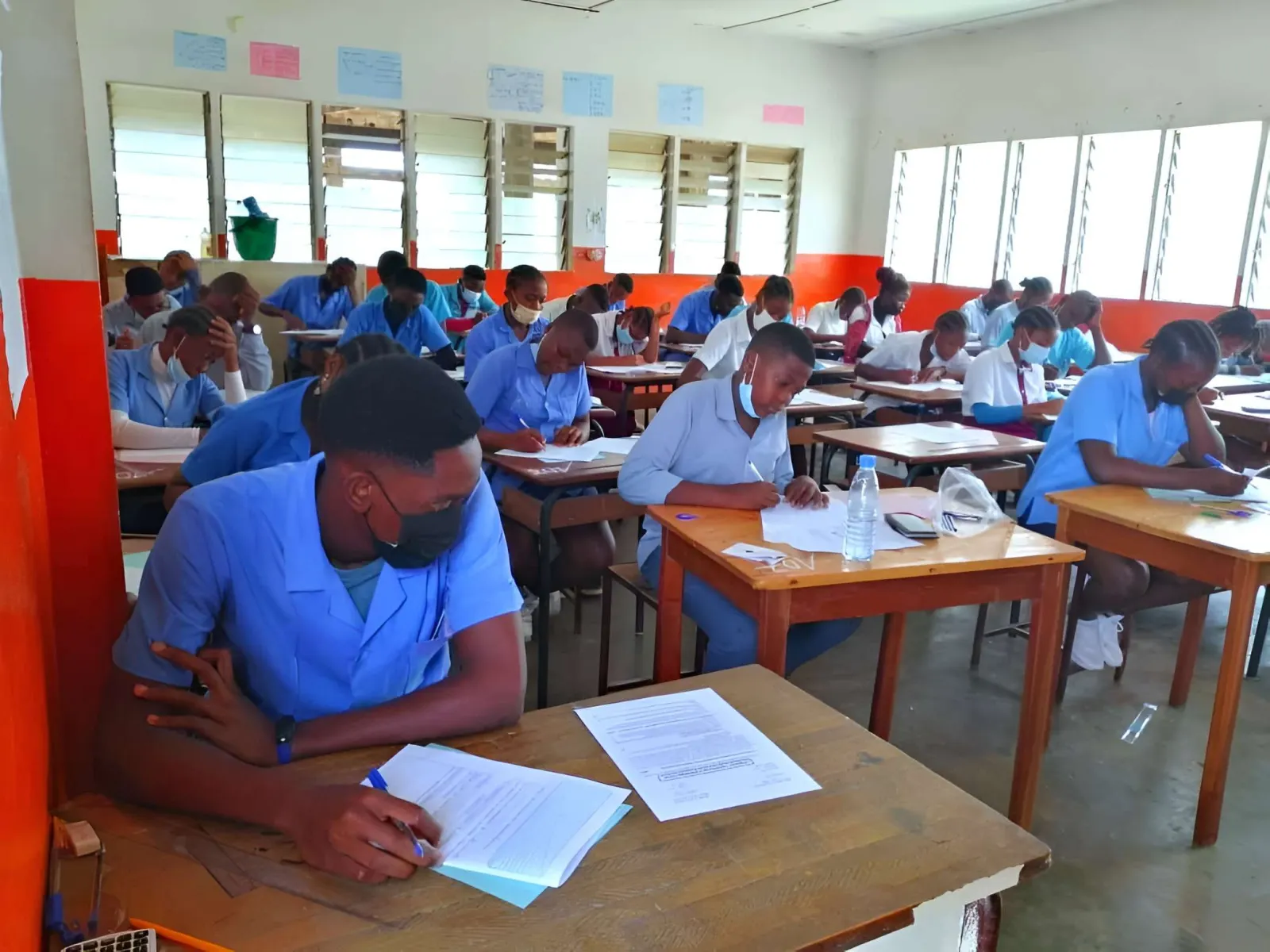
Every year, nearly 200,000 Grade 11 (Première) students face a forced pause in their curriculum to confront the Probatoire. This rite of passage, as stressful as it is costly, is currently at the heart of a heated debate. Why does this exam persist?
A Diploma Without Real Functional Value
In practice, the Probatoire suffers from a major paradox: it validates a stage without opening any doors.
Lack of Opportunities: Unlike the Baccalaureate, it does not grant access to university.
Professional Futility: It confers no recognized qualification on the job market and provides access to almost no civil service exams (with the notable exceptions of the Gendarmerie and CENAJES).
An Administrative "Tunnel": For many, it is neither a beginning nor an end, but a bottleneck that slows down the academic journey without offering any real academic added value.
The Financial Equation
The organization of this national exam involves colossal sums, raising questions about its actual profitability.
The Revenue: With 200,000 candidates paying an average of 19,500 FCFA, the State collects approximately 4 billion FCFA in exam fees. This amount must cover the printing of exam papers, center security, as well as the fees for thousands of teachers mobilized for proctoring and grading.
A "Social Filter" at the Expense of Success
The Probatoire acts as a ruthless sieve. Under the guise of "selecting the best," it functions primarily as a tool for exclusion. Failure in the Probatoire is often synonymous with dropping out of school.
A Colonial Heritage Abandoned by Its Creator
The Cameroonian system remains anchored in a French model from the 1960s.
The Origin: In France, the examen probatoire lasted only two years (1963-1964) before being abolished in 1965.
Modernity: Today, the majority of global education systems prioritize "continuous assessment" for promotion to the final year (Terminale), reserving national exams for the Baccalaureate alone.
The Legal Paradox: An Abolition Voted but Never Applied
Technically, the Probatoire should already belong to the past. The 1998 Education Orientation Law provided for its abolition as part of the harmonization of the Francophone and Anglophone sub-systems.
The Initial Project: A first cycle of 5 years (ending in Seconde) and a second cycle of 2 years.
The Gridlock: Although signed by the Head of State, this reform requires a global overhaul of curricula that is struggling to materialize, leaving the exam in a sort of permanent "legal vacuum."
Why Is It Maintained Regardless?
Proponents put forward four key arguments to justify its survival:
Verification of Knowledge: Ensuring foundations are solid before the critical Baccalaureate year.
Enrollment Regulation: Relieving congestion in Terminale classes by eliminating the weakest profiles.
Learning Rigor: Accustoming students to managing the stress of official exams.
While waiting for a hypothetical reform, we at the Centre Éducatif Bastos already have our eyes set on the June 2026 session—the 63rd edition of this dreaded exam.
Author: Club Journal - Centre Éducatif Bastos